

What is the power consumption of a water to water heat pump?
As a supplier of Water To Water Heat Pumps, I often get asked about the power consumption of these systems. Understanding the power consumption of a water to water heat pump is crucial for both residential and commercial users, as it directly impacts operating costs and energy efficiency. In this blog post, I'll delve into the factors that influence the power consumption of water to water heat pumps and provide some insights to help you make informed decisions.
How a Water To Water Heat Pump Works
Before we discuss power consumption, let's briefly understand how a Water To Water Heat Pump operates. A water to water heat pump transfers heat from one water source to another. It uses a refrigeration cycle to extract heat from a low - temperature water source (such as a well, lake, or ground - water loop) and transfer it to a high - temperature water source (for heating purposes) or vice versa for cooling.
The basic components of a water to water heat pump include a compressor, an evaporator, a condenser, and an expansion valve. The compressor is the heart of the system and is responsible for circulating the refrigerant and increasing its pressure and temperature. The evaporator absorbs heat from the low - temperature water source, and the condenser releases heat to the high - temperature water source.
Factors Affecting Power Consumption
1. System Size
The size of the water to water heat pump is one of the most significant factors affecting power consumption. A larger heat pump with a higher capacity will generally consume more power than a smaller one. When sizing a heat pump, it's essential to accurately calculate the heating and cooling loads of the building or application. An oversized heat pump will cycle on and off more frequently, leading to increased power consumption and reduced efficiency. On the other hand, an undersized heat pump will run continuously to meet the demand, also resulting in higher energy use.
2. Coefficient of Performance (COP)
The Coefficient of Performance is a measure of the efficiency of a heat pump. It is defined as the ratio of the heat output to the electrical power input. A higher COP means that the heat pump can produce more heat or cooling for a given amount of electrical energy. For example, a heat pump with a COP of 4 can produce 4 units of heat for every 1 unit of electrical energy consumed. Modern water to water heat pumps can have COPs ranging from 3 to 6 or even higher under ideal conditions. Heat pumps with higher COPs will consume less power to achieve the same heating or cooling output.
3. Temperature Difference
The temperature difference between the low - temperature and high - temperature water sources has a significant impact on power consumption. A larger temperature difference requires the heat pump to work harder to transfer heat, which increases the power consumption. For instance, if the heat pump is extracting heat from a water source at 5°C and delivering it to a water source at 50°C, it will consume more power compared to a situation where the temperature difference is smaller, say from 10°C to 40°C.
4. Operating Conditions
The operating conditions, such as the flow rate of the water through the heat pump and the ambient temperature, also affect power consumption. If the water flow rate is too low, the heat transfer efficiency will decrease, and the heat pump will have to work longer to achieve the desired temperature, leading to increased power consumption. Similarly, extreme ambient temperatures can reduce the efficiency of the heat pump and increase power use.
Calculating Power Consumption
To calculate the power consumption of a water to water heat pump, you can use the following formula:
Power Consumption (kW) = Heat Output (kW) / COP
For example, if a heat pump has a heat output of 10 kW and a COP of 4, the power consumption will be 10 kW / 4 = 2.5 kW.
It's important to note that this is a simplified calculation, and in real - world applications, the power consumption may vary due to factors such as system inefficiencies, part - load operation, and changes in operating conditions.
High Temperature Water Source Heat Pumps
In some applications, High Temperature Water Source Heat Pumps are required to produce hot water at higher temperatures. These heat pumps typically have different power consumption characteristics compared to standard water to water heat pumps.
High temperature water source heat pumps need to overcome a larger temperature difference to produce hot water at higher temperatures. As a result, they generally have lower COPs and higher power consumption. However, advancements in technology have led to the development of more efficient high - temperature heat pumps that can achieve relatively high COPs even at high output temperatures.
Strategies to Reduce Power Consumption
1. Proper Sizing
As mentioned earlier, proper sizing of the heat pump is crucial. Work with a professional HVAC engineer to accurately calculate the heating and cooling loads and select the appropriate size of the heat pump.
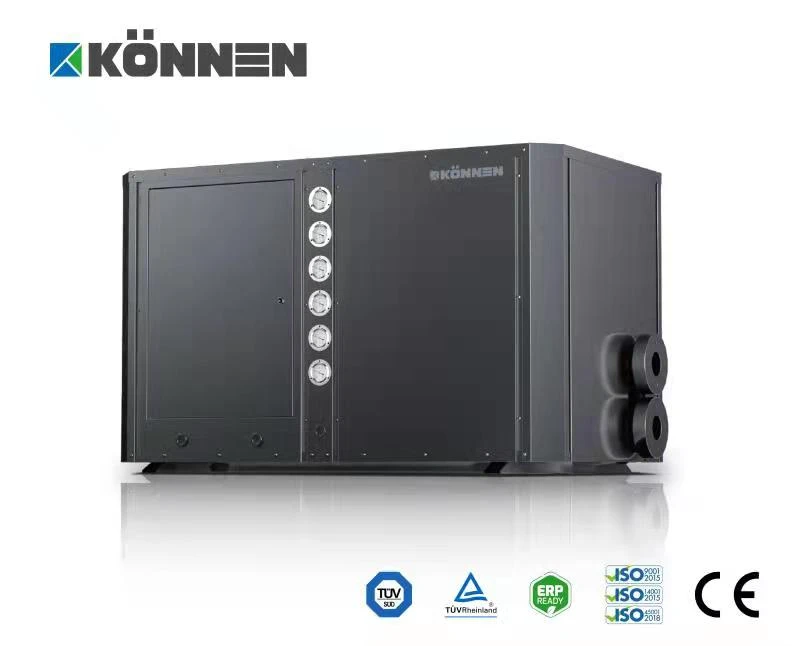

2. Regular Maintenance
Regular maintenance of the heat pump, including cleaning the coils, checking the refrigerant levels, and ensuring proper water flow, can improve its efficiency and reduce power consumption.
3. Optimize Operating Conditions
Try to maintain optimal operating conditions, such as the right water flow rate and temperature difference. You can also consider using a variable - speed compressor, which can adjust the compressor speed according to the load, resulting in lower power consumption.
Conclusion
The power consumption of a water to water heat pump is influenced by several factors, including system size, COP, temperature difference, and operating conditions. By understanding these factors and implementing strategies to reduce power consumption, users can enjoy the benefits of a water to water heat pump while keeping energy costs under control.
If you're considering purchasing a water to water heat pump for your residential or commercial application, we're here to help. Our team of experts can assist you in selecting the right heat pump based on your specific requirements and provide guidance on installation and maintenance. Contact us to start a procurement discussion and find the best solution for your needs.
References
ASHRAE Handbook - HVAC Systems and Equipment.
Manufacturer's technical documentation for water to water heat pumps.